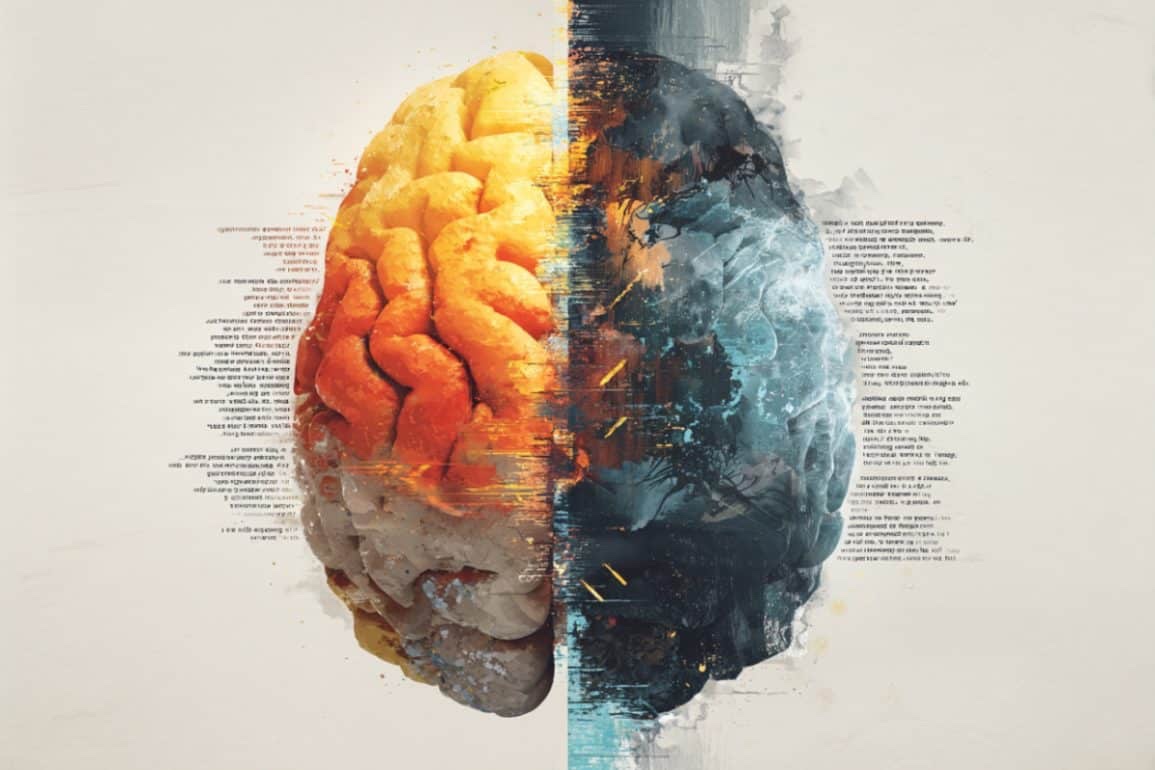

molecular changes in the brain with PTSD & depression

A comprehensive approach that examines the intersection of multiple biological processes is necessary to elucidate the development of stress-related disorders. In a new study, investigators from McLean Hospital, a member of the  Mass General Brigham healthcare system, working with colleagues at The University of Texas at Austin and Lieber Institute for Brain Development, uncovered both shared and distinct …

how storytelling style shapes the way the brain forms memories

Does the way a person hears about an event shape their recollection of it later? In a new Journal of Neuroscience paper, Signy Sheldon and colleagues, from McGill University, explored whether different storytelling strategies affect how the brain stores that experience as a memory and recalls it later.  The researchers created narratives with the same core events, …

effects of yoga on brain waves & structural activation: a review

Previous research has shown the vast mental and physical health benefits associated with yoga. Yoga practice can be divided into subcategories that include posture-holding exercise (asana), breathing (pranayama, Kriya), and meditation (Sahaj) practice. Studies measuring mental health outcomes have shown decreases in anxiety, and increases in cognitive performance after yoga interventions. Similar studies have also shown cognitive …

vagus physiology: answers to critical questions you didn’t know you had – part II

Can different pathophysiological mechanisms and risk factors leading to various diseases be linked with altered nerve transmission via one common pathway? The authors of a 2012 scientific article published in the journal, Clinical Science, (3) hypothesized that adequate vagal nerve activity reduces the risk of major diseases through common basic mechanisms.. There are 3 basic mechanisms that …

does mobile phone radiation affect the brain?

Does mobile phone radiation affect the brain and, if so, how does it do so? New studies shed light on these important questions, especially for young people whose brains are still developing. In their paper, a team of scientists from China* said that mobile phone radiation has been linked with memory loss, attention problems, cognitive …

consciousness, time and dukkha

Hans Karl Hermann Rudolph Gebser was born in modern day Poland and was a philosopher, poet and linguist. His major thesis was that human consciousness is in transition, and that these transitions are "mutations" and not continuous. These jumps or transformations involve structural changes in both mind and body. Gebser held that previous consciousness structures continue …

when fear gets stuck: an epigenetic mechanism

Fear-based mental health conditions are common, impacting millions of people worldwide. Previous research has shown that specific regions and pathways in the brain may be responsible for processing fear. A new study from Linköping University in Sweden has revealed a biological mechanism that impacts fear pathways and how fear memories are stored in the brain. …

the great slowdown: why breaking down is waking up

The history of humankind is like a maze; a collection of pathways, designed to lead us from a beginning to an end goal with the journey entailing much retracing of steps, the occasional dead end and from time to time that sense that we’ve all been here before — after all, aren’t those who don’t …

calming dysregulation fast – ten trigger hacks

When you have Childhood PTSD, there’s nothing worse than being in some crucial conversation, or some big moment, and some little thing triggers you. And even though you know it’s not worth getting upset about, you get upset anyway. You can feel it spreading through your body — the feeling of adrenaline and discombobulation, feeling numb in …