
effects of yoga on brain waves & structural activation: a review

Previous research has shown the vast mental and physical health benefits associated with yoga. Yoga practice can be divided into subcategories that include posture-holding exercise (asana), breathing (pranayama, Kriya), and meditation (Sahaj) practice. Studies measuring mental health outcomes have shown decreases in anxiety, and increases in cognitive performance after yoga interventions. Similar studies have also shown cognitive …

quality sleep & adaptive emotional regulation: key factors in mental health resilience

High-quality sleep and adaptive cognitive emotional regulation strategies can help to promote resilience to depression and anxiety when faced with negative or stressful experiences, according to new research published in the scientific journalย Cortex. The researchers were interested in understanding why some individuals experiencing chronic stress develop mental health problems, while others do not. They believed …

emotional dysregulation & inflammation

Elevated inflammation is a risk factor for many psychiatric (e.g., depression) and somatic conditions (e.g., rheumatoid arthritis). Inflammation is influenced by psychosocial processes such as emotion regulation. Characterization of which emotion regulation characteristics impact inflammation could help refine psychosocial interventions aimed at normalizing health-harming inflammatory activity for individuals with psychiatric and somatic illnesses. We systematically reviewed the …

vagus physiology: answers to critical questions you didn’t know you had – part III

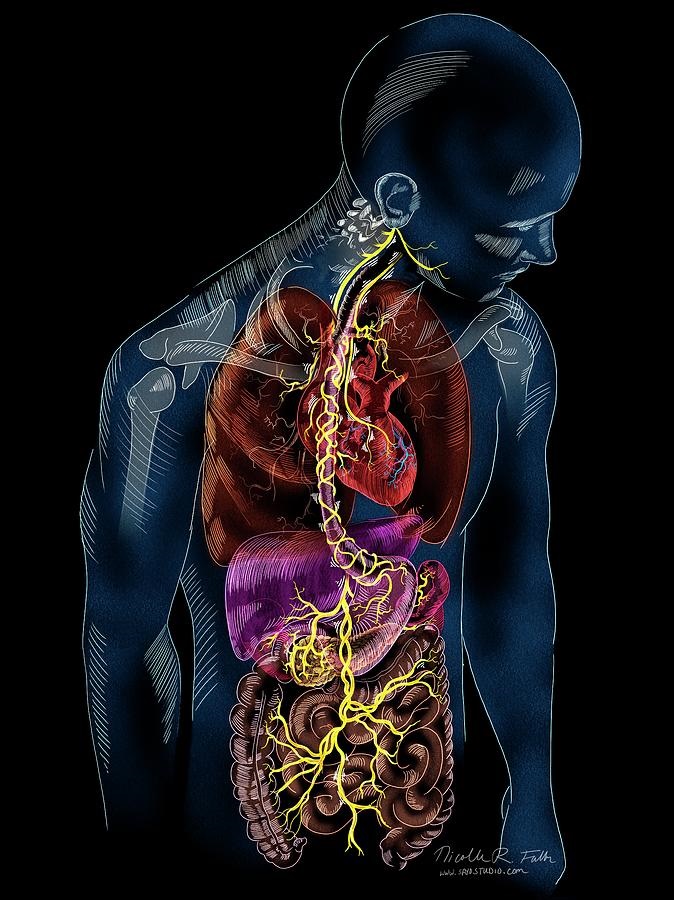
In part III of our article on vagus physiology, we look at the treatment for these, until recently, little-known but critically important and widespread conditions of the vagus nerve which are the root cause of many illnesses for millions of people worldwide. In parts I and II of this article, we have laid a basic …

the science of flow: heart brain coherence

Many contemporary scientists believe it is the underlying state of our physiological processes that determines the quality and stability of the feelings and emotions we experience. The feelings we label as positive actually reflect body states that are coherent, meaning "the regulation of life processes becomes efficient, or even optimal, free-flowing and easy,"[160] and the feelings …

does mobile phone radiation affect the brain?

Does mobile phone radiation affect the brain and, if so, how does it do so? New studies shed light on these important questions, especially for young people whose brains are still developing. In their paper, a team of scientists from China* said that mobile phone radiation has been linked with memory loss, attention problems, cognitive …

when fear gets stuck: an epigenetic mechanism

Fear-based mental health conditions are common, impacting millions of people worldwide. Previous research has shown that specific regions and pathways in the brain may be responsible for processing fear. A new study from Linkรถping University in Sweden has revealed a biological mechanism that impacts fear pathways and how fear memories are stored in the brain. …

drawing with hand, head and heart: beyond the right side of the brain

The laborer works with his hands, the craftsman works with his hands and his head, the artist works with his hands, his head and his heart โ€” Francis of Assisi (1182-1226) Over the past few decades, the theory that postulates dual operations of the brain has become a popular and practical model for understanding the …

breathwork: coherence and union

If I say mind and thinking, you automatically know that we are talking about head. And reason. With the same automatism, you know that when using the words emotion and feeling all the rest of the body is put into play from the heart. The world of sensations. Who knows how many times in your school, affective, professional life, these two parts acted separately or, worse, …