The brain is the most complex and intricate part of the human body, and yet many of us don’t recognize just how many functions it carries out on a daily basis. Inside your head, there are approximately sixty trillion neural connections (pathways between brain cells), and while the brain represents only 2–2.5% of the body mass, it consumes …
use it or lose it: neurofeedback brain training & cognitive aging
Across a human life span, changes in cognition are expected to occur as individuals grow older. Most of the changes experienced in aging are related to a decline in fluid intelligence, defined as the capacity to solve problems and articulate ideas, to navigate new situations, and to acquire knowledge. On the other hand, crystallized intelligence, …
Continue reading "use it or lose it: neurofeedback brain training & cognitive aging"
quality sleep & adaptive emotional regulation: key factors in mental health resilience
High-quality sleep and adaptive cognitive emotional regulation strategies can help to promote resilience to depression and anxiety when faced with negative or stressful experiences, according to new research published in the scientific journal Cortex. The researchers were interested in understanding why some individuals experiencing chronic stress develop mental health problems, while others do not. They believed …
emotional dysregulation & inflammation
Elevated inflammation is a risk factor for many psychiatric (e.g., depression) and somatic conditions (e.g., rheumatoid arthritis). Inflammation is influenced by psychosocial processes such as emotion regulation. Characterization of which emotion regulation characteristics impact inflammation could help refine psychosocial interventions aimed at normalizing health-harming inflammatory activity for individuals with psychiatric and somatic illnesses. We systematically reviewed the …
neurobiology of psychedelic experience
Scientists have identified specific patterns of brain network reconfigurations that occur when people take both classical and non-classical psychedelic drugs. Their findings, published in NeuroImage, shed new light on how psychedelics affect the brain and consciousness. The authors behind the new study wanted to better understand the neurobiology of the psychedelic experience by examining the common …
vagus physiology: answers to critical questions you didn’t know you had – part II
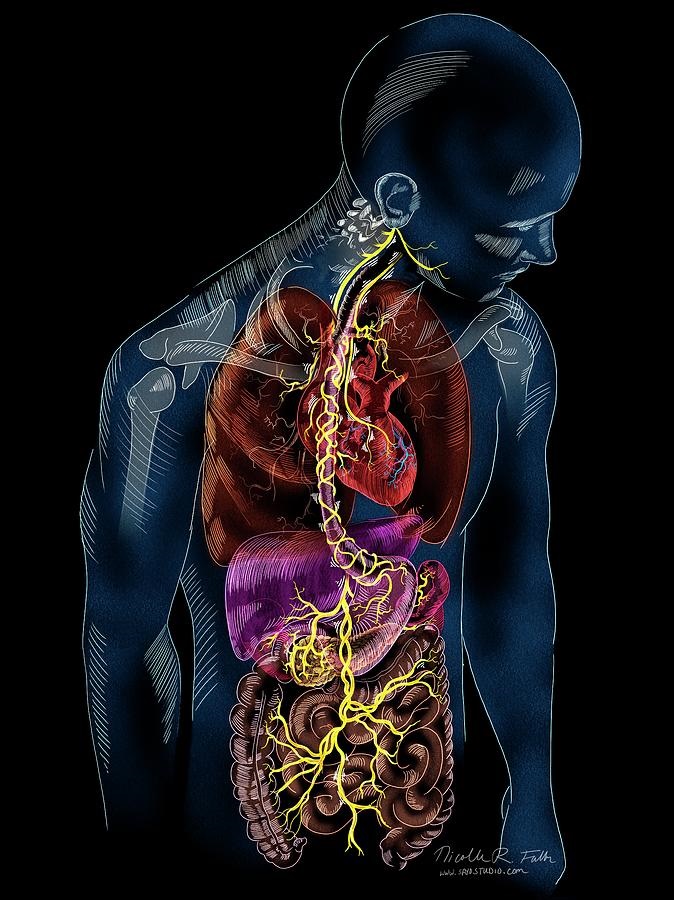
Can different pathophysiological mechanisms and risk factors leading to various diseases be linked with altered nerve transmission via one common pathway? The authors of a 2012 scientific article published in the journal, Clinical Science, (3) hypothesized that adequate vagal nerve activity reduces the risk of major diseases through common basic mechanisms.. There are 3 basic mechanisms that …
Continue reading "vagus physiology: answers to critical questions you didn’t know you had – part II"
when fear gets stuck: an epigenetic mechanism
Fear-based mental health conditions are common, impacting millions of people worldwide. Previous research has shown that specific regions and pathways in the brain may be responsible for processing fear. A new study from Linköping University in Sweden has revealed a biological mechanism that impacts fear pathways and how fear memories are stored in the brain. …
Continue reading "when fear gets stuck: an epigenetic mechanism"
breathwork: coherence and union
If I say mind and thinking, you automatically know that we are talking about head. And reason. With the same automatism, you know that when using the words emotion and feeling all the rest of the body is put into play from the heart. The world of sensations. Who knows how many times in your school, affective, professional life, these two parts acted separately or, worse, …
ptsd: another look – part 1
Post-traumatic stress disorder (PTSD) is a disorder that develops in some people who have experienced a shocking, scary, or dangerous event. It is natural to feel afraid during and after a traumatic situation. Fear triggers many split-second changes in the body to help defend against danger or to avoid it. This “fight-or-flight” response is a …
in the zone: how we achieve brain flow
You are playing such an intense video game and are focused so intently on getting to the next level that you don’t know what is going on around you. You have no sense of time passing. You feel great. You are “in the zone.” You are experiencing flow. You are running a marathon and you …